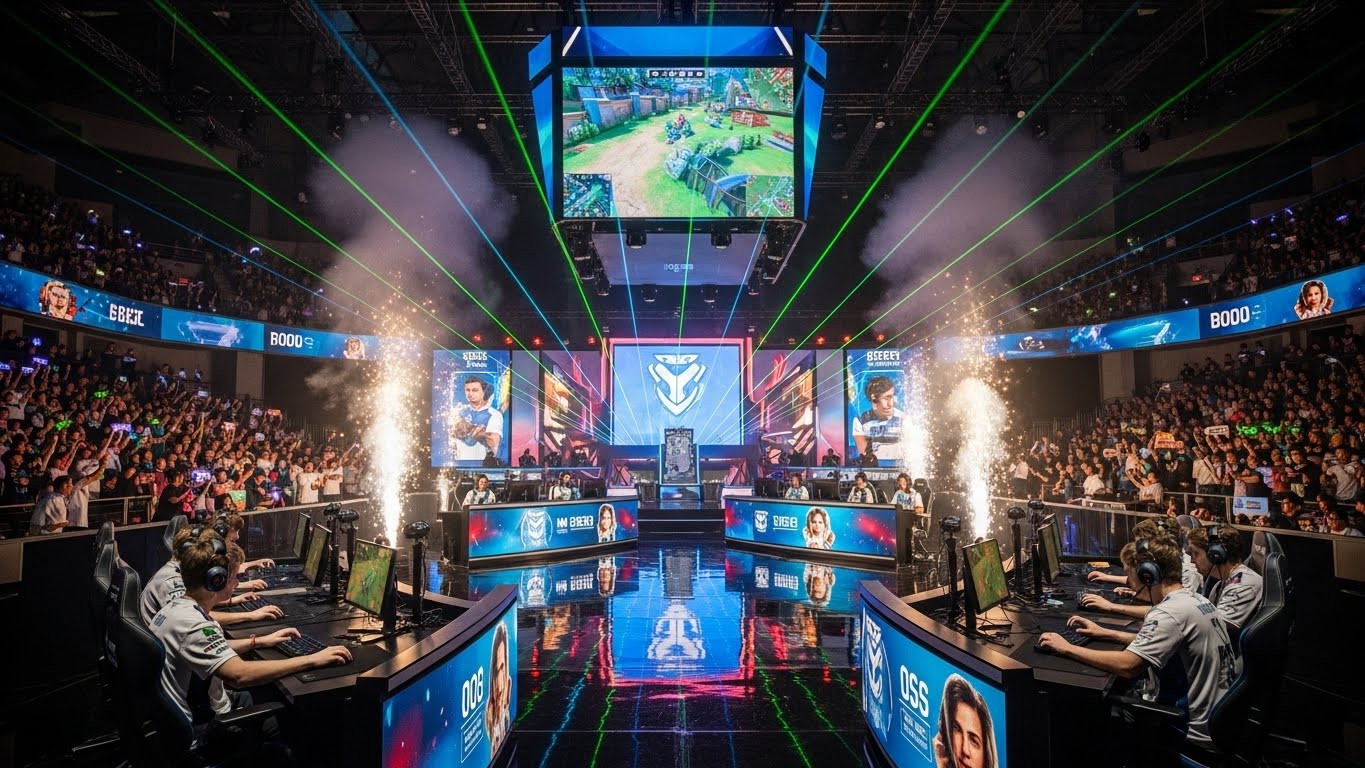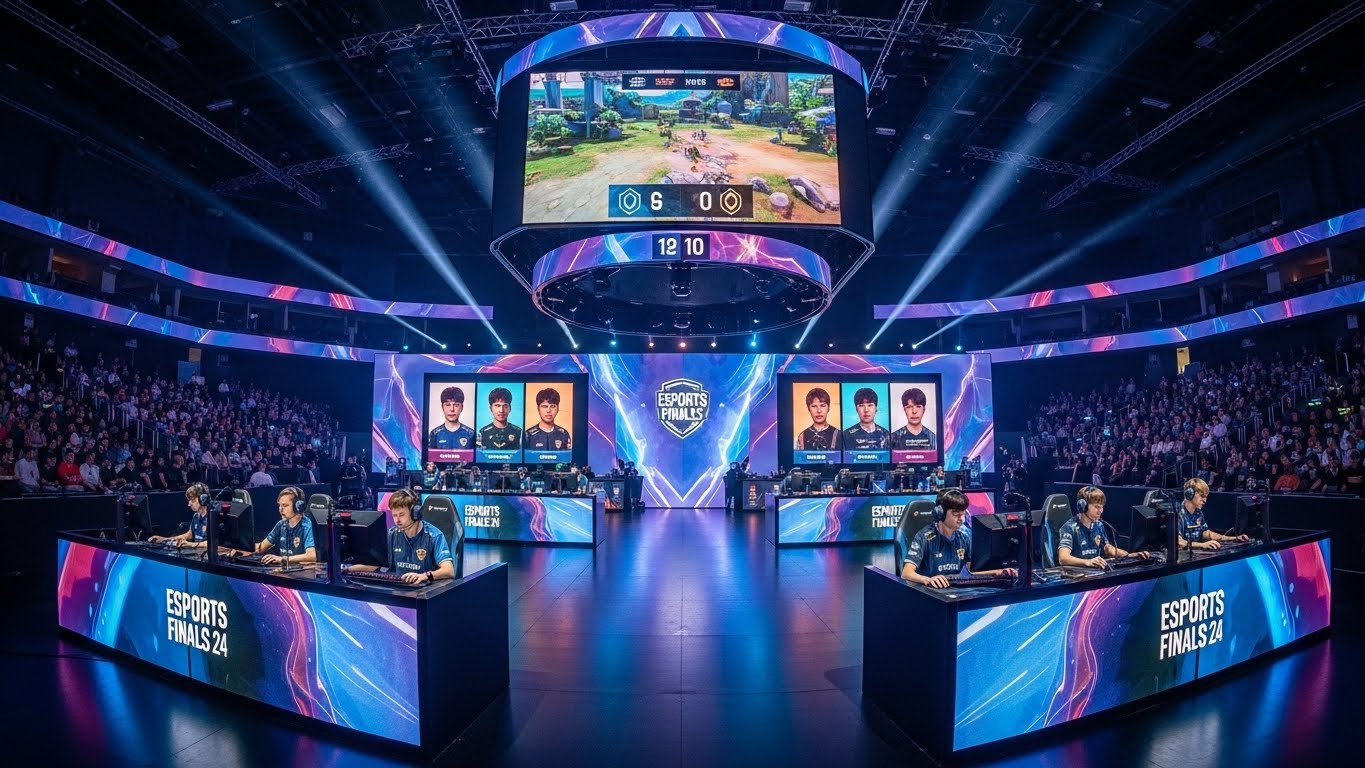
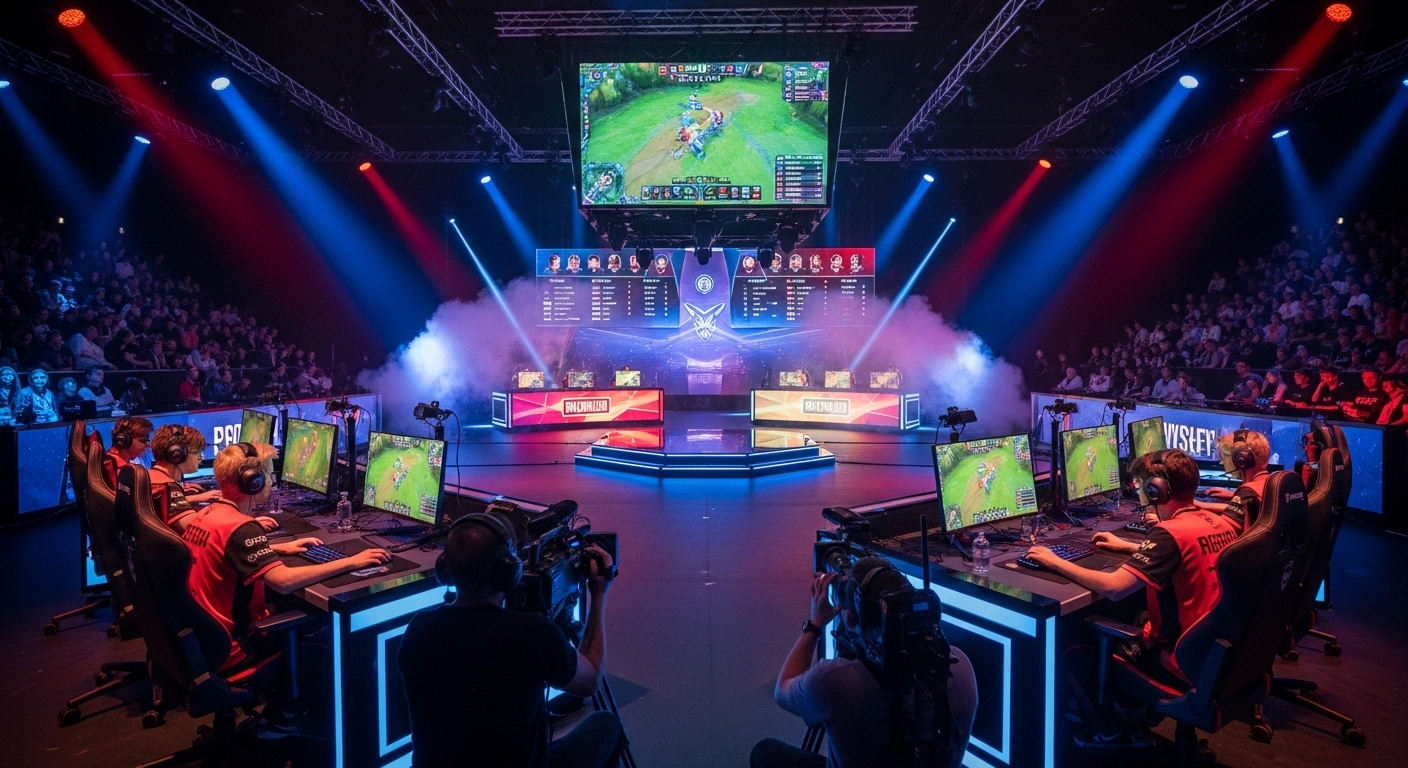
Esports has emerged as one of the most significant cultural and economic forces of the 21st century. Once a niche hobby confined to small communities of gamers, esports has exploded into a global industry, attracting millions of players, viewers, and investors. Today, esports is not only a competitive sport but also a form of entertainment that bridges the gap between traditional sports, gaming, and digital media. From online tournaments to sold-out arenas and major sponsorship deals, the rise of esports is a story of innovation, passion, and community. In this blog post, we will explore the evolution of esports, its impact on the gaming industry and society, and what the future holds for this rapidly growing phenomenon.
The Origins of Esports: From LAN Parties to Global Competitions
The roots of esports can be traced back to the early days of gaming when players competed informally with one another in multiplayer games. However, it was in the 1990s that competitive gaming began to take its first organized steps. One of the earliest examples of esports events was the Red Annihilation tournament held in 1997 for the game Quake. This tournament was groundbreaking not only because of the high level of competition but also because of its massive prize pool. The winner of the Red Annihilation tournament received a Ferrari, making it one of the first instances of large-scale rewards in esports history.
During the same era, LAN (Local Area Network) parties became popular, where gamers would gather in large groups to play games like StarCraft, Warcraft, Quake, and Counter-Strike. These gatherings, often held in basements or community centers, were the precursors to the large-scale esports tournaments we see today. They laid the foundation for the development of a global competitive gaming scene by allowing players to connect with one another in real-time and compete in highly competitive environments.
The late 1990s and early 2000s saw the birth of professional esports leagues and tournaments. In South Korea, StarCraft became a national sensation, and the Korean eSports Association (KeSPA) was established in 2000 to organize professional competitions. The game’s popularity in South Korea helped solidify esports as a legitimate form of competition, and the country soon became the epicenter of global esports culture.
The Evolution of Esports: Growth, Globalization, and Mainstream Recognition
As the internet improved and high-speed broadband became more widely accessible, online multiplayer gaming became the standard. This shift allowed esports to break free from local LAN parties and evolve into a global phenomenon. The early 2000s witnessed the creation of key esports tournaments like the World Cyber Games (WCG) and Electronic Sports World Cup (ESWC), which brought together the best players from around the world to compete in various games such as Warcraft III, Counter-Strike, and FIFA.
The 2010s marked the point when esports truly started to cross over into the mainstream. Platforms like Twitch revolutionized the way competitive gaming was consumed. Launched in 2011, Twitch quickly became the go-to platform for live streaming video games, including esports tournaments. Gamers could watch professionals compete in real-time, interact with commentators, and engage with fans from all over the world. This streaming revolution enabled esports to grow beyond a small niche and reach millions of viewers globally.
One of the key moments in the history of esports came in 2011 with the debut of League of Legends (LoL) by Riot Games. LoL quickly became one of the most popular and influential competitive games in the world, leading to the creation of the League of Legends World Championship—an annual event that now boasts prize pools in the millions of dollars. The success of LoL helped further legitimize esports and showed the world that competitive gaming could be just as thrilling and financially rewarding as traditional sports.
As esports grew, so too did its audience. What was once a subculture of hardcore gamers evolved into a mainstream entertainment phenomenon, drawing in fans from all walks of life. Major sports networks like ESPN began airing esports tournaments, and traditional sports organizations took notice. The National Basketball Association (NBA), for example, launched the NBA 2K League in 2018, a professional esports league based on the popular NBA 2K video game series. Other major companies, such as Coca-Cola, Intel, and Nike, began sponsoring esports teams and events, recognizing the massive potential of the industry.
Esports as a Career: Professional Players, Coaches, and Teams
As esports grew in popularity, it also developed into a legitimate career path. Professional players, coaches, analysts, and team managers began to emerge as key figures within the esports ecosystem. Esports players now make a living from competing in high-level tournaments, securing sponsorship deals, and streaming their gameplay on platforms like Twitch and YouTube. For top-tier players, esports has become not just a hobby but a full-time career with a salary, benefits, and endorsement deals.
The rise of esports organizations and teams has also been a significant development in the industry. Teams like Team Liquid, Cloud9, and Fnatic have become household names within the esports community, fielding elite players to compete in games like League of Legends, Counter-Strike: Global Offensive, and Dota 2. These organizations are often backed by investors, with multi-million dollar deals and sponsorships from major brands.
In addition to players, coaches and analysts play a crucial role in the success of esports teams. Coaches develop strategies, analyze gameplay, and help players hone their skills. The emergence of team staff, including performance psychologists, nutritionists, and video analysts, shows that esports is being treated with the same professionalism and attention to detail as traditional sports. This growing infrastructure has made esports a viable career for a wide range of individuals, from players to behind-the-scenes staff.
The Role of Streaming and Content Creation in Esports
Streaming and content creation have become central to the growth of esports. Platforms like Twitch and YouTube allow fans to not only watch live esports competitions but also interact with their favorite players and streamers. These platforms have democratized entertainment, enabling anyone with a gaming setup and an internet connection to broadcast their gameplay to a global audience.
For many professional esports players, streaming has become an essential part of their career. Players can supplement their tournament earnings by streaming on platforms like Twitch, where they receive revenue from advertisements, subscriptions, and donations from fans. This has given rise to a new breed of content creators who blend competitive gaming with entertainment. Streamers like Ninja, Shroud, and Pokimane have millions of followers and have become influential figures in both the gaming and mainstream media worlds.
In addition to individual streamers, esports organizations and tournament organizers also benefit from streaming. Major esports events, such as The International (Dota 2) and The League of Legends World Championship, attract millions of viewers online. These tournaments are often broadcast in multiple languages, allowing fans from all corners of the globe to tune in. The accessibility of streaming has made esports more inclusive, allowing fans from all backgrounds to engage with their favorite teams and players.
The Impact of Esports on Society and Culture
Esports has had a profound impact on both the gaming community and society as a whole. For gamers, it has transformed what was once considered a solitary activity into a social experience. Online multiplayer games allow people to connect with friends, form teams, and compete against others from around the world. Esports has also created a sense of belonging for many people who have found a community of like-minded individuals who share their passion for gaming.
Moreover, esports has played a role in breaking down cultural barriers. Competitive gaming is a global phenomenon, and players from different countries and backgrounds regularly face off against one another in international tournaments. The success of esports in countries like South Korea, China, the United States, and Europe has made it a truly global sport, transcending national borders and fostering international collaboration and competition.
Esports has also become an educational tool. Many universities and colleges now offer scholarships to students who excel in esports, providing opportunities for young gamers to pursue higher education while continuing to compete at a professional level. Esports programs are now an integral part of many educational institutions, and several universities have even established dedicated esports arenas and teams.
The Future of Esports: Innovation, Expansion, and Sustainability
As esports continues to grow, its future looks incredibly promising. The industry is expected to generate billions of dollars in revenue through sponsorships, broadcasting rights, merchandise sales, and ticket sales to live events. The rise of mobile esports, with games like PUBG Mobile and Free Fire dominating the global competitive scene, indicates that esports will continue to diversify and reach new audiences.
In addition to the expansion of esports as a competitive sport, we are likely to see innovations in how esports events are experienced. Virtual reality (VR) and augmented reality (AR) technologies could transform the way fans interact with tournaments, creating immersive viewing experiences that bring fans closer to the action. Imagine watching a live esports match from the perspective of the player, or even interacting with in-game events in real time.
Sustainability will also be a key issue for the future of esports. As the industry continues to grow, there will be an increased focus on reducing its environmental impact. From the energy consumption of large-scale tournaments to the carbon footprint of travel and events, the esports industry will need to adopt sustainable practices to ensure its long-term viability.
Conclusion: Esports is Here to Stay
Esports has come a long way from its humble beginnings in LAN parties and informal competitions. Today, it stands as one of the most significant global entertainment industries, attracting millions of fans, players, and investors.