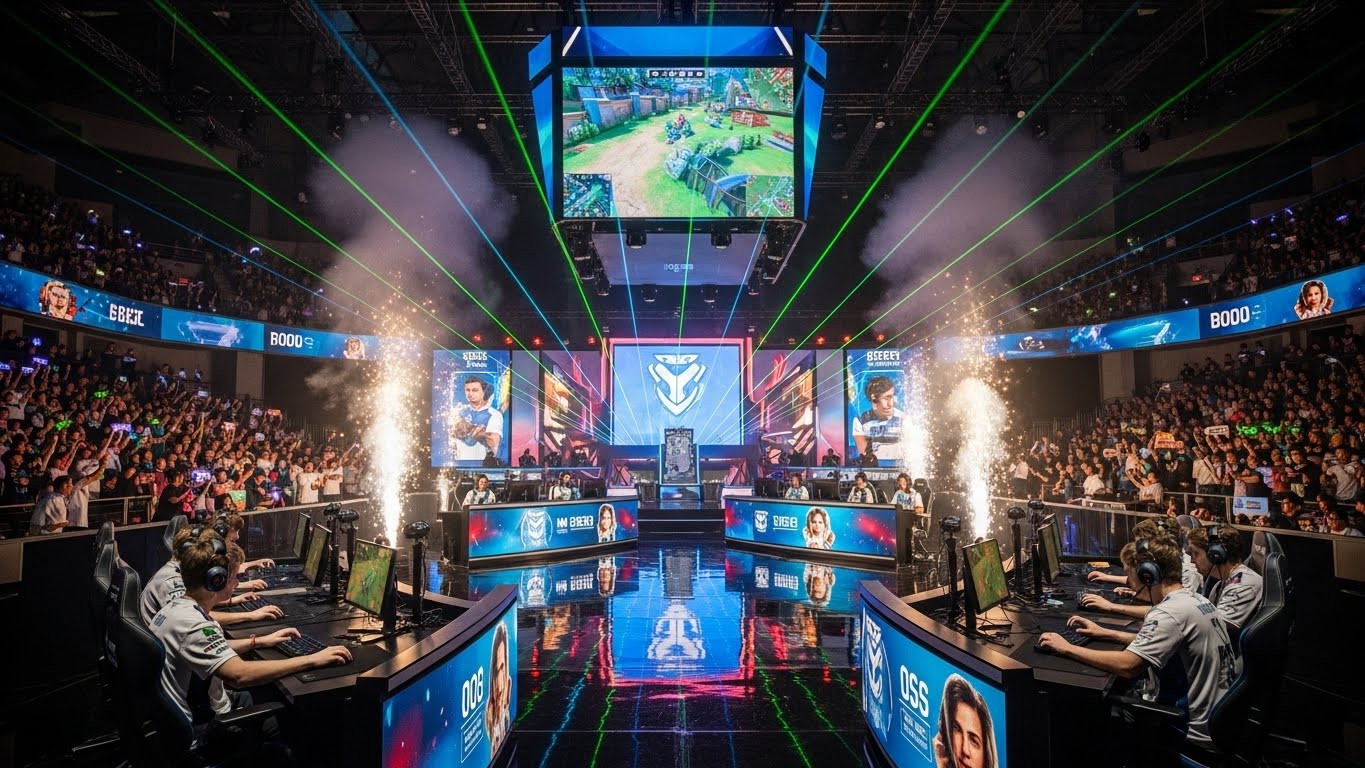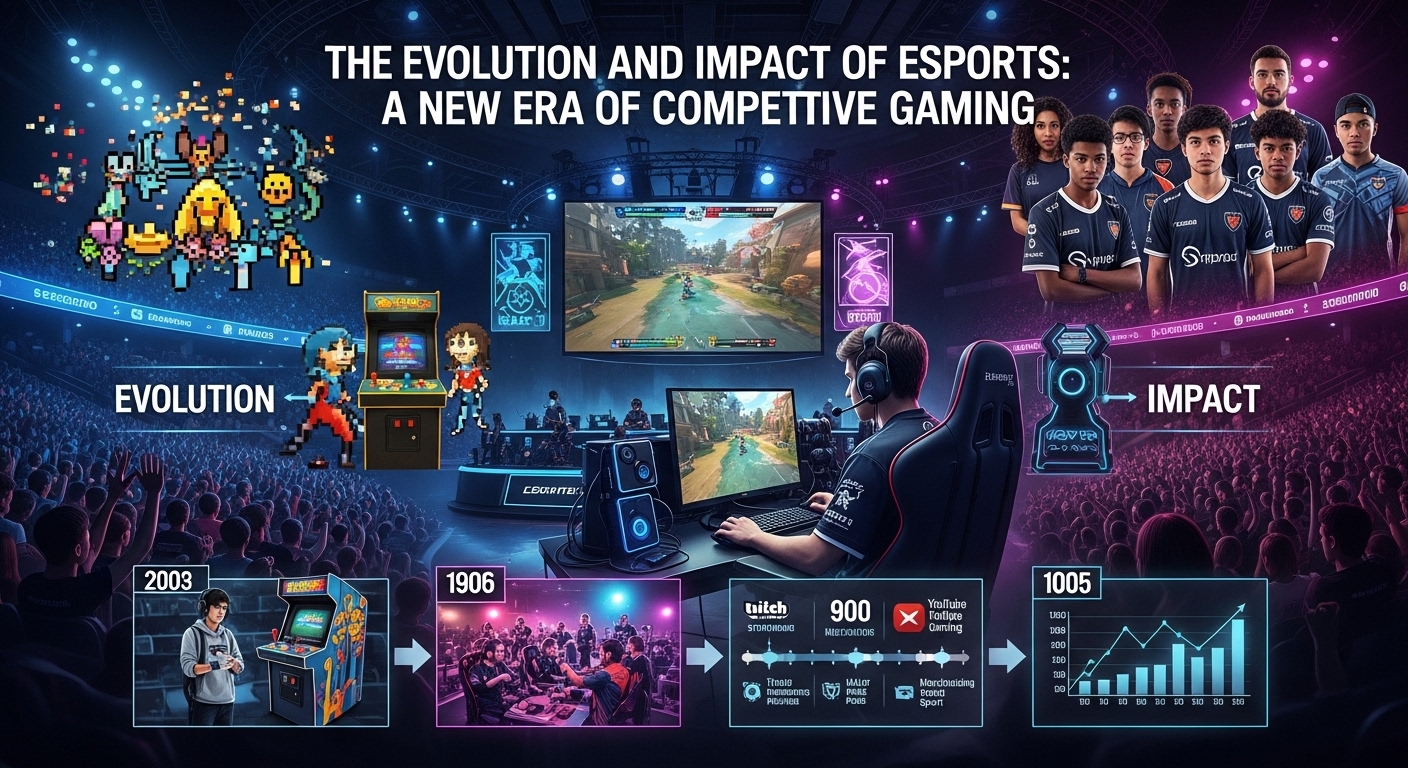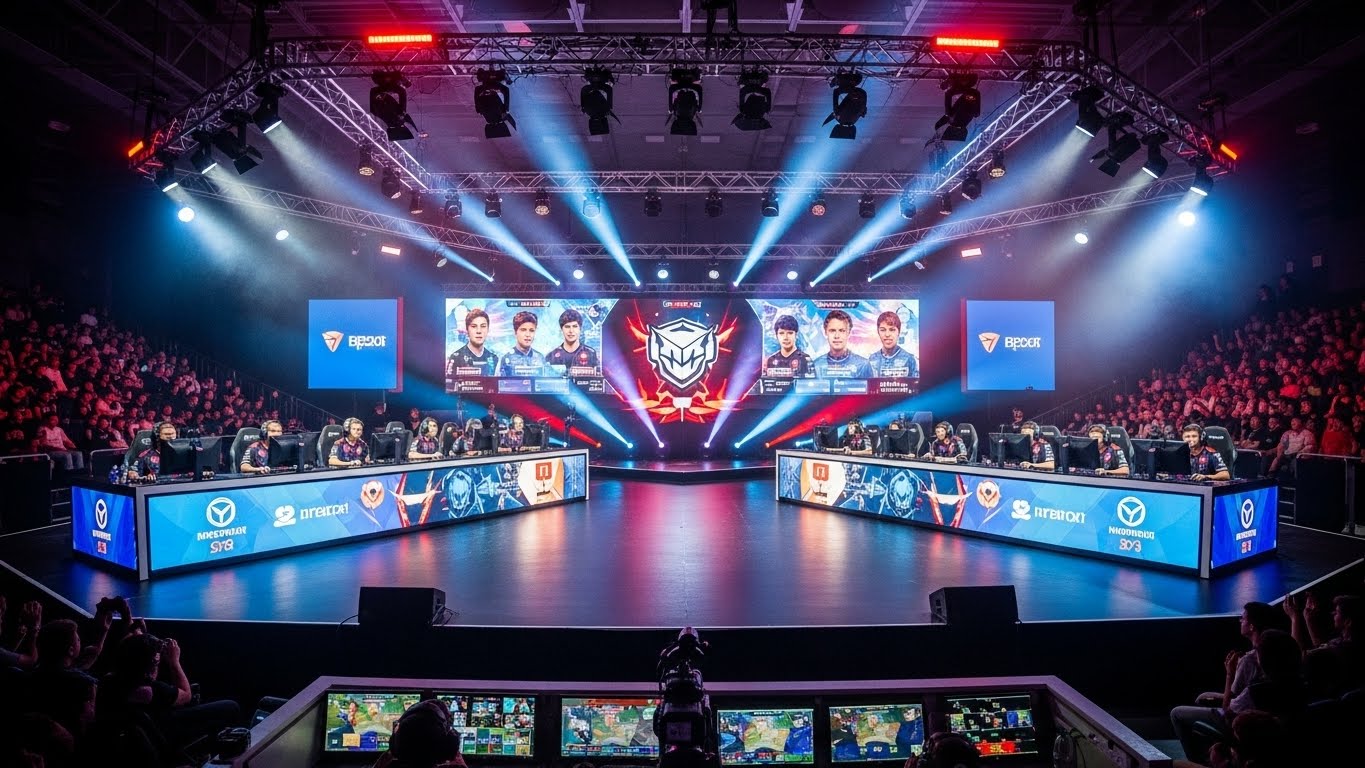
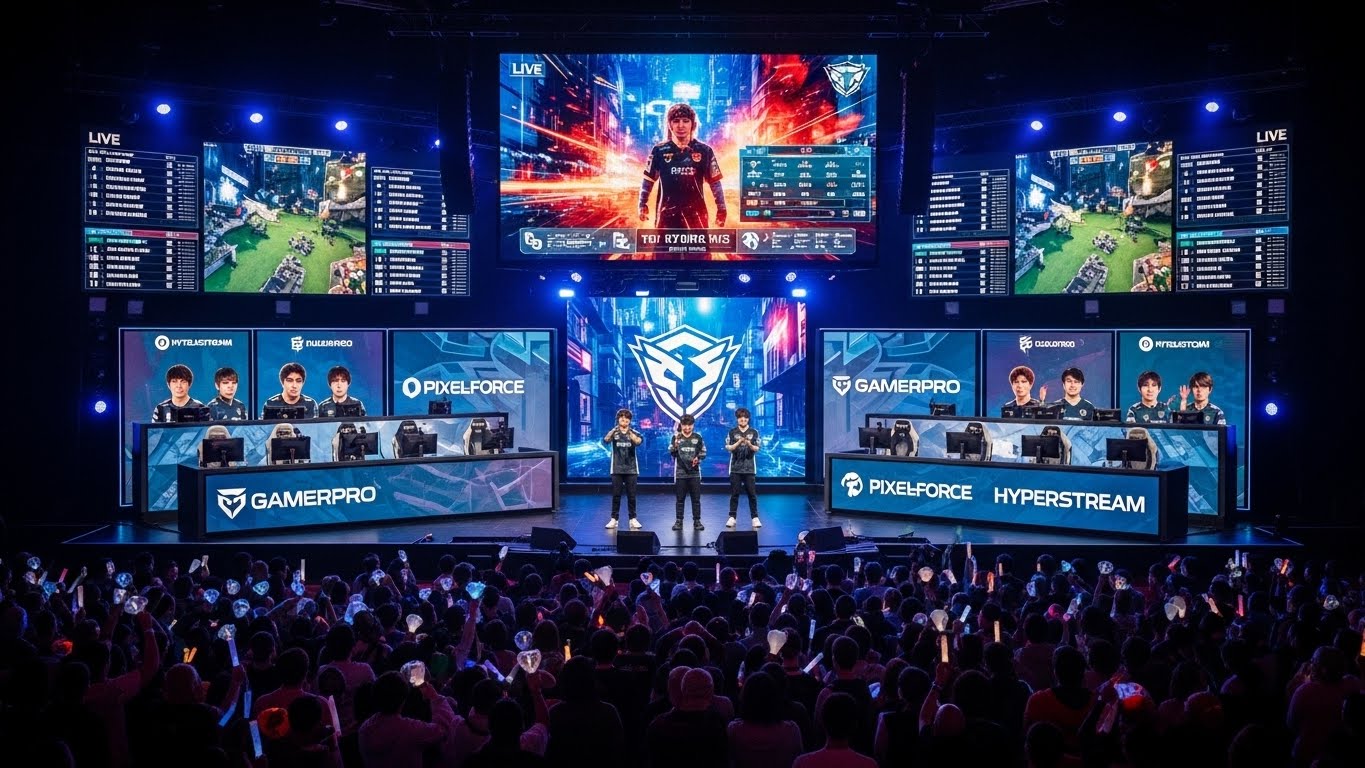
The world of competitive gaming, popularly known as esports, has transformed from a niche hobby into a global phenomenon. What was once seen as mere entertainment or a pastime for enthusiasts has evolved into a highly professional industry, complete with tournaments, sponsorships, and dedicated fan communities. Esports is not just about playing video games; it is a reflection of modern technology, cultural trends, and the evolving nature of competition. In this blog, we explore the origins of esports, its impact on society, the benefits and challenges it presents, and what the future holds for this rapidly growing industry.
The Evolution of Esports
Esports traces its origins to the late 1970s and early 1980s, when arcade and console gaming competitions first emerged. Early tournaments were small-scale events, often organized in arcades or college campuses. The rise of internet connectivity in the 1990s and 2000s significantly expanded the reach of competitive gaming, allowing players from different parts of the world to compete in real-time.
Games such as StarCraft, Counter-Strike, and Warcraft became early pillars of the esports community, attracting dedicated players and spectators alike. Today, esports encompasses a diverse range of games, including multiplayer online battle arenas, first-person shooters, real-time strategy, and sports simulation titles. The scale of contemporary esports tournaments rivals traditional sports events, drawing millions of viewers and offering prize pools worth millions of dollars.
The Global Appeal of Esports
One of the defining characteristics of esports is its universal appeal. Unlike traditional sports, which may require physical ability or access to facilities, esports is accessible to anyone with a computer or gaming console and an internet connection. This accessibility has allowed esports to flourish in countries across the globe, from South Korea and China to North America and Europe.
Esports also appeals to a wide demographic, attracting viewers of all ages and backgrounds. Live streaming platforms have transformed the way fans engage with esports, creating a sense of community where players and spectators can interact directly. The global nature of esports ensures that cultural boundaries are blurred, uniting people through shared passion and competition.
The Physical and Mental Benefits of Esports
Although esports is often criticized for being sedentary, it provides a range of cognitive and psychological benefits. Competitive gaming requires strategic thinking, quick decision-making, and precise hand-eye coordination. Players develop skills such as multitasking, problem-solving, and spatial awareness, which are valuable both in gaming and real-world scenarios.
Mentally, esports fosters resilience, focus, and teamwork. Professional players must maintain discipline in their training schedules, develop effective communication strategies with teammates, and cope with high-pressure situations. The psychological skills gained through esports can enhance performance in academic and professional settings, making it more than just a recreational activity.
Esports as a Career
The rise of esports has created a variety of career opportunities. Professional players compete for substantial prize money and often secure sponsorships from leading brands. Beyond players, careers in coaching, team management, broadcasting, content creation, event organization, and game analysis are thriving.
Esports organizations operate like traditional sports franchises, employing staff for marketing, public relations, and performance analysis. Universities have also begun offering scholarships for esports players, further legitimizing competitive gaming as a viable career path. The professionalization of esports has transformed it into a sustainable industry with long-term growth potential.
The Economic Impact of Esports
Esports has become a major economic driver in the digital age. Tournaments attract large audiences, both in-person and online, generating revenue from ticket sales, merchandise, sponsorships, and media rights. Companies invest heavily in esports advertising, recognizing the opportunity to reach engaged and tech-savvy audiences.
Streaming platforms have become crucial to the esports ecosystem, providing revenue streams for players and organizations through subscriptions, donations, and advertising. The economic influence of esports extends beyond gaming companies, impacting technology, entertainment, marketing, and tourism industries, particularly in cities that host major tournaments.
The Cultural Significance of Esports
Esports has developed its own vibrant culture, complete with fan communities, rituals, and shared experiences. Gaming events are celebrated as social gatherings where fans connect with players, engage in discussions, and celebrate achievements. Cosplay, fan art, and online forums contribute to a rich cultural ecosystem around esports.
Moreover, esports challenges traditional perceptions of competition and athleticism. It emphasizes skill, strategy, and mental agility over physical prowess, broadening the definition of what it means to be an athlete. This cultural shift has helped esports gain legitimacy and recognition alongside traditional sports.
Technology and Innovation in Esports
Technology plays a central role in the growth of esports. Advanced gaming hardware, high-speed internet, and sophisticated software enable seamless gameplay and global connectivity. Innovations such as virtual reality, augmented reality, and artificial intelligence are increasingly integrated into esports, enhancing training, fan engagement, and overall experience.
Live streaming and broadcasting technologies allow fans to watch tournaments in real-time, interact with players, and participate in digital communities. Analytics tools provide insights into player performance, team strategies, and audience engagement, enabling data-driven decision-making for teams and organizers.
Challenges Facing Esports
Despite its rapid growth, esports faces several challenges. The physical health concerns associated with prolonged screen time, repetitive strain injuries, and sedentary lifestyles are notable. Mental health pressures, including burnout, stress, and performance anxiety, affect many professional players.
The industry also grapples with issues such as cheating, match-fixing, and inconsistent regulations across regions. Ensuring inclusivity, gender equality, and fair access remains a challenge, as esports communities sometimes struggle with toxicity and harassment. Addressing these issues is critical for the sustainable growth of esports.
The Educational Value of Esports
Esports offers unique educational opportunities. Schools and universities increasingly recognize competitive gaming as a tool for learning critical thinking, leadership, and collaboration. Esports programs provide students with exposure to technology, event management, and digital media, preparing them for careers in various industries.
Additionally, esports encourages creativity and innovation. Players often develop content such as tutorials, strategy guides, and live commentary, honing communication skills and building personal brands. By integrating esports into education, institutions cultivate a generation of digitally literate, strategically minded, and socially engaged individuals.
The Social Impact of Esports
Esports has significant social implications. It fosters community building, connecting individuals who may otherwise feel isolated due to geographic, physical, or social barriers. Online and offline esports events provide platforms for interaction, friendship, and collaboration.
Esports also promotes diversity and inclusion. Players from different backgrounds, abilities, and cultures can compete on equal footing, challenging stereotypes and expanding perceptions of talent and capability. For individuals with disabilities or social challenges, esports offers opportunities for participation, recognition, and empowerment.
The Future of Esports
The future of esports looks promising, marked by growth, innovation, and mainstream acceptance. Esports will continue to expand across platforms, devices, and genres, incorporating emerging technologies and immersive experiences. Integration with virtual reality and artificial intelligence could redefine gameplay, training, and fan engagement.
Sustainability, inclusivity, and regulation will become central concerns, ensuring that esports develops responsibly and ethically. As the line between entertainment, education, and competition continues to blur, esports will solidify its place as a transformative force in culture, technology, and society.
Conclusion: Esports as a Cultural and Competitive Phenomenon
Esports is no longer just a hobby; it is a global movement shaping the way we interact, compete, and connect in the digital era. From physical and mental benefits to career opportunities, economic impact, and cultural significance, esports has far-reaching implications. It challenges traditional notions of sports, fosters innovation, and unites communities across the globe.
As technology advances and society embraces digital competition, esports will continue to thrive, offering new opportunities, experiences, and inspirations. Beyond the screen, esports teaches resilience, strategy, teamwork, and creativity, making it a powerful and lasting phenomenon in the modern world.